- Thomas Sparrow
- BBC World, Washington (@bbc_sparrow)
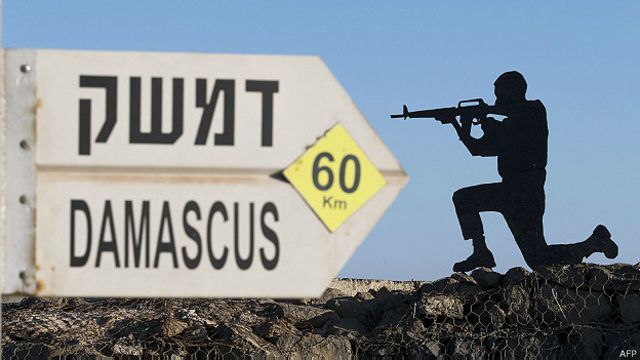
Image source: AFP
For its ground fighting in Syria, the US is looking for allies.
The United States Congress recently approved a project by President Barack Obama to arm and train moderate rebels in Syria as part of the strategy against the self-proclaimed Islamic State (IS) group.
The president described the decision as a sign of unity and bipartisan support in the face of the threat from militants and assured that the training program will be carried out with the support of Arab countries and will be based outside of Syria.
"Strong bipartisan support in Congress for this new training effort shows the world that Americans are united in confronting the threat of ISIL," Obama said, using the government's acronym for ISIL. of Syria and the Levant.
But the support of the majority of congressmen has not prevented there from also being skepticism in Washington about the project and, above all, about the risks involved in getting involved in a fragmented country, difficult to understand and immersed in a long civil war.
Especially among some high-ranking military personnel, there are doubts about the president's veto of having American soldiers on the ground and direct combat being carried out mainly by allied forces that are not necessarily completely reliable.
"There are no angels in the Syrian war"
One of the main questions about the strategy is knowing exactly who these moderate rebels are and how moderate and credible they really are.
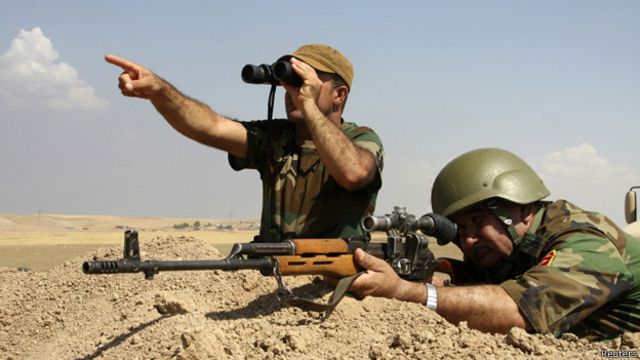
Image source: Reuters
In Iraq, fighting on the ground is being carried out by groups such as the peshmerga.
In Syria there are an estimated 1.500 groups, according to data published by the Congressional Research Service. And according to estimates revealed last week by Secretary of State John Kerry, there are "tens of thousands of opposition fighters."
Many of these groups are fighting among themselves and are divided on tactics, goals and strategies. Several oppose both IS and Bashar al-Assad's government.
"For more than three years, Western governments have tried to create a moderate Syrian opposition that they can support with words and perhaps even weapons," says Jeremy Bowen, the BBC's Middle East editor. "Very little has been achieved that has had an effect within Syria itself."
"The problem for the United States is that the war policies in Syria are tangled," he adds. "Finding reliable allies will be difficult."
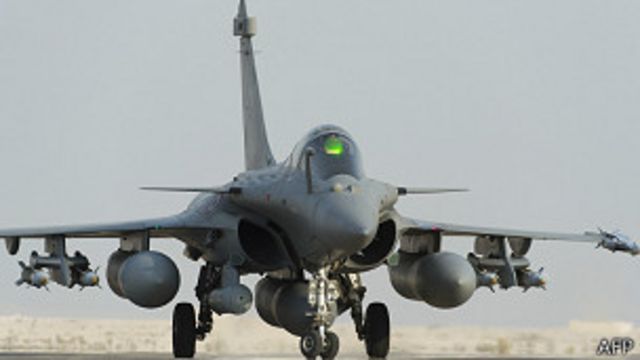
Image source: AFP
France announced that it will join the air strikes against the self-proclaimed Islamic State.
Kerry acknowledged at a Senate Foreign Relations Committee hearing on Wednesday that he won't always be able to control what happens on the ground, but he also said he has a vetting process underway to determine exactly who he can count on. Much of the details remain, however, classified.
Among what is known is that the United States only considers a few of these groups "serious" - those with several thousand members - and has met with some of their representatives in Turkey and even in Syria. This was revealed in that same hearing by former ambassador to Syria Robert Ford.
Ford also explained exactly what Washington means when he talks about "moderates."
"What I mean by that word is that the leaders of these groups do not seek to impose a religious state on Syrian society by force," he said.
"That said," the former ambassador continued, "there are now no angels in the Syrian war."
The risks of the strategy
That quote from the former ambassador reveals the extent to which the United States is aware of the difficulties it faces with this "key element" of its strategy, as Obama defined it on Thursday.
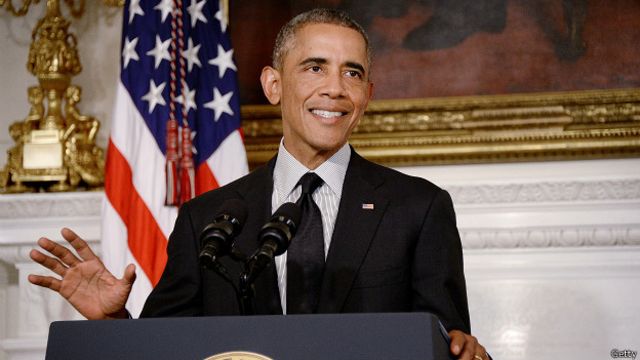
Image source: Getty
Obama applauded Congress' decision to approve his plan to arm and train moderate Syrian rebels.
"There are always risks when you are not there physically in large numbers," Ben Connable, an analyst at the Rand think tank and who testified in the Senate alongside Ford and Kerry, tells BBC Mundo.
"We run the risk of unintentionally arming some people who may change their minds and do things we don't want," he explains.
"It is also possible that (some of these groups) end up fighting against the Bashar al Assad regime instead of against IS, which would not be fulfilling the main purpose," he adds.
This problem is due to the fact that the majority of armed opposition groups oppose IS, but at the same time some fighters continue to consider that their greatest enemy is the Assad government.
The Secretary of State assured that the verification process will put the government in a better position to "command and control" these groups and have "deeper greater reliability."
And he added that if the groups manage to defeat IS, "they will take that experience in the same direction they originally proposed, which is to deal with Assad."
But not everyone is convinced that the strategy will have the desired effect.
"Having a force of the kind the Americans want - so tight and so strong that their weapons never reach the jihadists - may be impossible," says the BBC's Jeremy Bowen.
"It will be just as difficult to train her to defeat the Islamic State," he concludes.
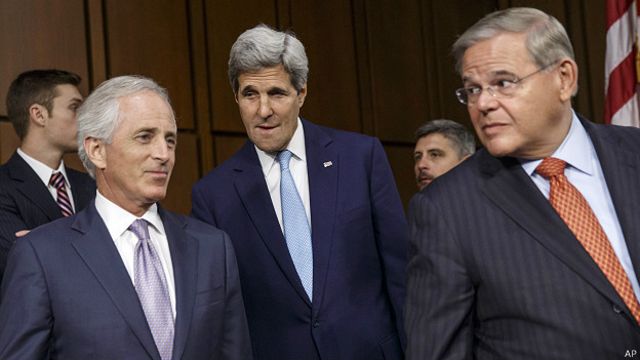
Image source: AP
The Senate approved Obama's plan a day after the House did the same.