The State of Food Security and Nutrition in the World 2026 (SOFI) report confirms an encouraging trend: global hunger continues to decline for the third consecutive year. The prevalence of undernourishment fell from 8,6% in 2022 to 7,8% in 2025, representing approximately 645 million people affected, 43 million fewer than in 2022.
However, this progress is profoundly uneven, with two regions standing out for their sustained advances: Asia and Latin America and the Caribbean.
Latin America and the Caribbean: the success story of South America
The region has reversed the negative trend following the pandemic, placing the prevalence of hunger at 4,8% in 2025, even below 2015 levels. Leadership is provided by:
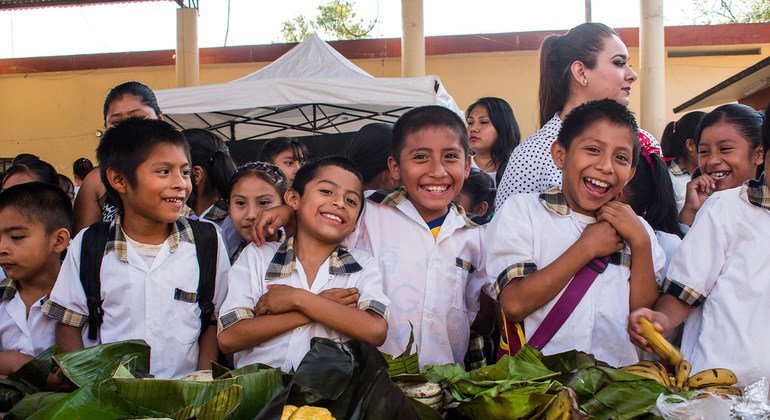
- South America (Brazil, Argentina, Chile, Peru, Colombia and Uruguay), where the combination of school feeding programs, conditional cash transfers and support for family farming has generated the most marked declines, going from 5,5% in 2020 to 3,5% in 2025
- Central America (Mexico, Guatemala, Honduras and El Salvador), with more moderate but steady progress (from 5,7% to 5,1%), sustained by the recovery of employment and the moderation of inflation
- The Caribbean, which remains the most affected subregion at 16,6%, where vulnerability to climate shocks and dependence on food imports maintain structural challenges
These results reflect the coordinated application of two fundamental pillars: social protection targeted at the most vulnerable (including school feeding programs) and attracting investment to sustainably increase agri-food production and productivity . Moderating food inflation and regional economic growth have created a favorable environment for these advances.
Asia: Accelerated recovery and structural reduction of hunger
Asia has consolidated a trajectory of sustained improvement, reducing the prevalence of hunger from 7,9% in 2021 to 6,0% in 2025. The progress is particularly notable in:
- South Asia (India, Bangladesh, Pakistan, Nepal and Sri Lanka), where the prevalence fell from 13,9% to 9,3%, driven by the expansion of social safety nets and the stabilization of local markets of cereals and legumes
- Southeast Asia (Indonesia, Vietnam, the Philippines, Thailand, and Myanmar), which fell from 5,6% to 5,1%, reflecting sustained investments in rural infrastructure and food security
- East Asia (China, Japan and the Republic of Korea), where the figure remains below 2,5%, sustained for decades of public investment in agricultural productivity and efficient distribution chains
As Máximo Torero, FAO 's chief economist , points out, these advances are explained by "greater economic growth, moderation of food inflation, expansion of social protection and sustained investments in more productive and resilient agri-food systems."
Africa: nascent progress in the face of structural challenges
For the first time, Africa is home to the largest number of people facing hunger in the world: 309 million in 2025, surpassing Asia (292 million). Although the regional prevalence decreased slightly from 20,3% in 2024 to 20,0% in 2025, population growth prevents a reduction in absolute terms.
The subregional differences are notable:
- North Africa (Egypt, Morocco, Tunisia and Algeria) registers the lowest rate in the region (9,8%)
- Southern Africa (South Africa, Zambia, Zimbabwe and Mozambique) stands at 12,3%, with uneven progress in market access
- West Africa (Nigeria, Senegal, Ghana and Ivory Coast) reaches 16,9%, where prolonged conflicts and price volatility limit the recovery
- East africa (Ethiopia, Kenya, Somalia and South Sudan) faces critical levels (25,6%), aggravated by recurring droughts and mass displacements
- Central Africa (Democratic Republic of Congo, Cameroon and Chad) registers the highest prevalence (28,9%), with structural barriers to access to financing and basic services
The report notes that, for the first time since the launch of the 2030 Agenda in 2015, Africa showed improvements in 2025 regarding moderate to severe food insecurity. However, the region faces structural challenges: protracted conflicts, extreme weather events, and vulnerability to macroeconomic shocks that limit the sustainability of this progress.
The developed world: residual hunger, increasing obesity
In North America and Europe, moderate to severe food insecurity affected 8,7% of the population in 2025, a figure much lower than in the rest of the world. Severe hunger has virtually disappeared as a widespread problem.
However, the SOFI report documents that the prevalence of obesity in adults has shown a steady increase globally, reaching 16,2% in 2024, a trend particularly pronounced in high-income countries.
The abundance of processed and ultra-processed foods, along with sedentary lifestyles, are the main drivers of this epidemic in the developed world, which contrasts with the hunger that persists in other regions.
The rising cost of healthy diets
The report reveals that the average global cost of a healthy diet increased by 25% in five years, to $4,28 PPP* per person per day in 2025, compared to $3,44 in 2021 and $2,94 in 2017. The number of people who cannot afford a healthy diet has decreased, from 2970 billion (37,4%) in 2021 to 2690 billion (32,7%) in 2025.
This overall improvement, however, masks profound regional disparities. In Africa, affordability has worsened considerably: 66,6% of the population cannot afford a healthy diet, more than double the rate in Asia and Latin America and the Caribbean. In Latin America, the main challenge is vegetables, which represent the largest component of the cost of a healthy diet in the region.
According to the report, " the challenge is not producing enough calories, but making nutrient-rich foods more affordable ." The document points out that between 70% and 75% of the cost of a healthy diet is generated after food leaves the farm, in transportation, storage, distribution, and intermediary margins.
Lessons to accelerate progress towards 2030
The success of Asia and Latin America and the Caribbean demonstrates that reducing hunger is possible when three elements converge: economic policies that favor inclusive growth, strategic investments in resilient agri-food systems, and well-designed social protection networks.
To sustain and expand these advances, the report underscores the need to:
- Rethinking agricultural subsidies, directing resources towards nutritious foods (fruits, vegetables, legumes) instead of concentrating them on staple grains
- Strengthening post-harvest value chainsespecially in refrigeration and transport, to reduce losses and lower costs of perishable foods
- Integrate social protection with local productioncreating short circuits that benefit both vulnerable consumers and small producers
As the report concludes, “reducing the cost of a healthy diet requires context-specific interventions, not one-size-fits-all solutions.” The path to Zero Hunger by 2030 depends on adapting these lessons to the realities of each region, with particular urgency in Africa, where recent progress must be consolidated in the face of multiple overlapping crises.
*Purchasing Power Parity: Currency conversion rates that aim to equalize the purchasing power of different currencies, eliminating differences in price levels between countries. They allow for more accurate comparisons of costs, incomes, or prices between countries than using market exchange rates.