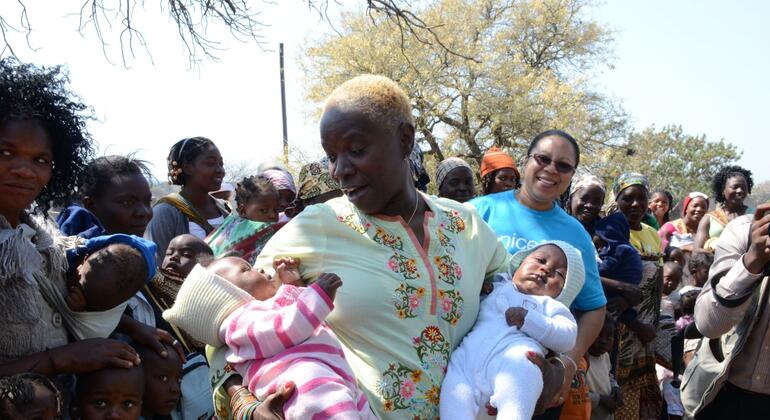
Breastfeeding rates are increasing globally, but millions of mothers and families still lack the services and conditions necessary to initiate and maintain this practice, especially in low-income countries and in humanitarian and fragile contexts. The proportion of babies exclusively breastfed for the first six months has risen from around 37% in 2012 to over 47% today , while breastfeeding up to two years has increased from 38% to 50% over the past five years.
To mark World Breastfeeding Week , UNICEF and the World Health Organization ( WHO ) called on governments to strengthen health systems, expand support for families, and ensure workplace policies that allow women to continue breastfeeding. The agencies emphasized that breastfeeding protects both maternal and infant health and that investing in effective measures to promote it can generate significant health and economic benefits.
More than just food: benefits for mothers and children
Breast milk provides essential nutrients, strengthens the immune system, helps protect children against serious illnesses, and supports their cognitive development . For mothers, it is also associated with a lower risk of non-communicable diseases, including breast and ovarian cancer and type 2 diabetes. Despite global progress, advancements remain uneven, and many countries are still far from meeting established targets.
A new analysis by the Global Breastfeeding Collective warns that a significant gap remains between policies and their implementation. Insufficient funding, oversight, and enforcement continue to hinder progress, while the global target is to achieve 60% exclusive breastfeeding by 2030.
Investing one dollar can generate 59 dollars in profit.
Supporting breastfeeding also has significant economic implications. According to the report, scaling up interventions within healthcare systems could generate up to $59 in returns for every dollar invested , primarily through improvements in cognitive development, educational outcomes, and lifetime productivity.
Conversely, a lack of investment comes at a considerable cost. Inadequate breastfeeding practices are associated with approximately 383.000 preventable infant deaths and 138.000 maternal deaths each year , in addition to 58 million lost years of education. The global economic impact of insufficient investment in these programs is estimated at $339.000 billion annually.
UNICEF and the WHO estimate that scaling up proven interventions could prevent nearly 400.000 child deaths and around 140.000 maternal deaths each year . Among the most effective measures are expert counseling, maternity protection, workplace support, and regulation of infant formula marketing.
What measures work?
The evidence gathered shows that professional support can have a considerable effect. A review of 38 studies concluded that infant feeding counseling and education increased exclusive breastfeeding by 58% , while the implementation of the Ten Steps to Successful Breastfeeding in hospitals was associated with a 45% increase in exclusive breastfeeding at six months.
Working conditions are also key. Paid maternity leave was associated with a 52% increase in exclusive breastfeeding , while having adequate spaces and policies in the workplace makes it easier for mothers to express and store milk after returning to work.
The regulation of the marketing of breast-milk substitutes also makes a difference. In countries whose legislation is largely aligned with the International Code of Marketing of Breast-milk Substitutes, the average exclusive breastfeeding rate reaches 54%, compared to 24% in those without such legal measures.
Supporting mothers inside and outside the healthcare system
Under the theme “Breastfeeding for a sustainable start in life: let’s build on what works,” this year’s World Breastfeeding Week focuses on scaling up strategies that have already proven successful. UNICEF and WHO are calling for the integration of breastfeeding support into prenatal, delivery, and postpartum care, the training of health workers, and the expansion of community-based peer counseling and support programs.
They also demand paid maternity leave and breastfeeding-friendly work environments, as well as the effective implementation of the International Code regulating the marketing of breast-milk substitutes . The report further identifies the need to provide special support to women in the informal sector, adolescents, and other vulnerable populations.
The analysis estimates that bringing a broad set of these interventions to 75% coverage in the countries with the greatest burden could prevent between 224.000 and 263.000 child deaths over the next decade and generate between $276.000 billion and $357.000 billion in economic benefits.
For UNICEF and the WHO, the challenge is no longer about determining what works. The interventions have been identified and their benefits demonstrated. The priority now is to ensure that mothers can access them regardless of where they live, how much they earn, or whether they are in an emergency situation.