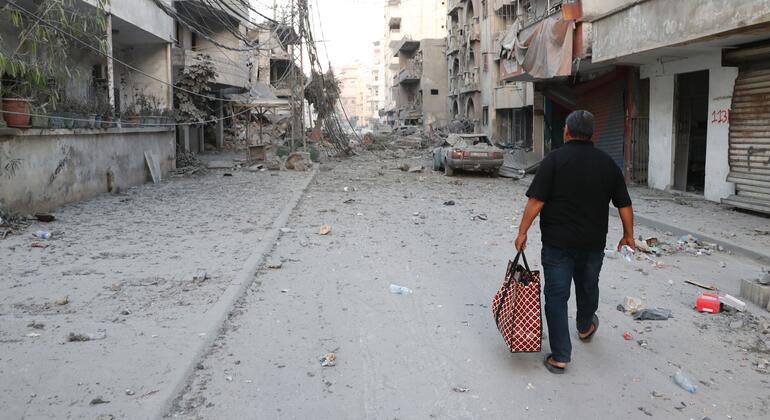
Around 860.000 people displaced by the conflict in southern Lebanon have returned to their homes, but the displacement crisis and humanitarian emergency are "far from over," the UN warned on Tuesday.
The region has suffered years of conflict, with Israeli airstrikes killing thousands and displacing more than a million since fighting resumed in March of this year. Despite multiple ceasefires declared since April, clashes between Hezbollah fighters and Israeli forces have continued.
The most recent ceasefire agreement, negotiated between Israeli and Lebanese authorities with US mediation in late June, demanded the complete disarmament of Hezbollah and the total withdrawal of Israeli forces from the south. However, fighting has continued, including last weekend when Israeli airstrikes triggered a new wave of displacement, with hundreds of families forced to flee north.
Persistent displacement crisis
Around 360.000 people remain displaced, including at least 22.000 living in collective shelters, according to UN figures. Many Lebanese are unable to return to their homes, located in conflict-ravaged areas . Debris, widespread infrastructure damage, and persistent insecurity have left health, water, and electricity services overwhelmed or inoperable.
Babar Baloch, spokesman for the UN Refugee Agency ( UNHCR ), stressed on Tuesday the need for temporary housing solutions for displaced families so that they can remain close to their communities.
" Humanitarian needs remain substantial . Widespread damage to homes, water systems, power grids, schools, health centers, farmland, and community infrastructure continues to limit the prospects for recovery," he said.
Although it has been reported that 860.000 people have made the return journey, many have not been able to enter their own damaged homes and are forced to live in nearby temporary accommodations.
Others continue to rely on rentals or temporary accommodation while they wait for debris removal, repairs to their homes, and the restoration of public services.
"Immense" needs and lack of funds
More than 700.000 people remain affected by damage to water infrastructure in parts of southern Lebanon.
The Lebanese government is providing protection services, shelter assistance, financial support, and psychosocial counseling to affected populations, with the help of humanitarian organizations such as UNHCR. However, these agencies face a severe funding shortage that limits their ability to intervene effectively and on a large scale.
The inter-agency lightning appeal of $639,9 million is only 48% funded. UNHCR's dedicated operation in Lebanon has only 24% of the necessary funds, compared to a total requirement of $472,3 million by 2026.