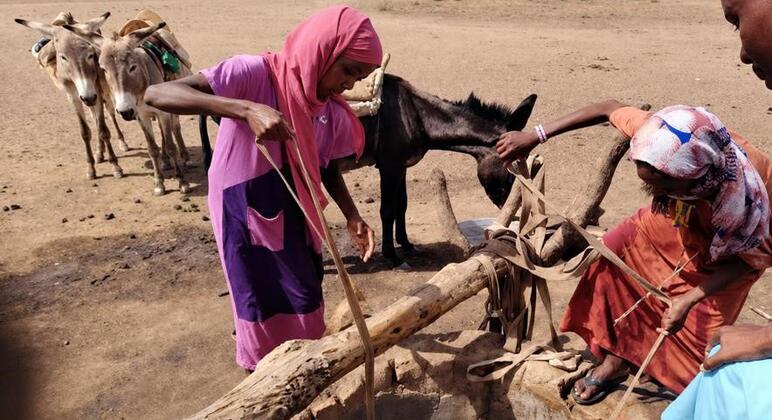
More than 200.000 people have been forced to leave their homes in Sudan's Kordofan region since the end of 2025, as intensified fighting, attacks on infrastructure and seasonal flooding exacerbate a humanitarian crisis that already has 8,6 million people displaced within the country , the International Organization for Migration ( IOM ) warned on Wednesday .
The situation is deteriorating in various parts of Sudan as significant population movements continue toward neighboring countries. While some are returning to Khartoum, in other parts of the country families continue to flee violence and face the loss of basic services such as water, electricity, and healthcare.
“The warning signs are impossible to ignore. Across Sudan, families are fleeing violence, losing access to water, electricity, and health care, and now face the additional burden of destructive flooding,” said IOM Director General Amy Pope.
The official warned that without urgent measures to protect civilians and restore essential services, the suffering of the population will continue to deepen.
More travel while essential services collapse
One of the most worrying situations is in North Kordofan , where intensified fighting and drone attacks on the main electrical transformer in El Obeid have caused prolonged power outages. These disruptions have affected water pumping, healthcare facilities, and telecommunications, extending the consequences of the violence far beyond the areas directly affected by the fighting.
In the town of Sheikan, displacement increased by 25% over the past eight months , while across the Kordofan region more than 200.000 people have had to leave their homes since the end of 2025.
The violence is also causing further population displacements in other regions. In Blue Nile , clashes in and around Geissan displaced some 7800 people , some of whom crossed the border into Ethiopia. In West Darfur, nearly 18.000 people were displaced during the first half of August.
Adding to the clashes is the impact of the rains. In Tawila, in North Darfur, heavy rainfall destroyed or damaged nearly 1350 homes last week and displaced more than 1000 families. Further flooding in Kabkabiya and Shangil Tobaya also forced dozens of families to seek refuge in temporary shelters.
The combination of violence, damage to infrastructure, and extreme weather events is pushing many families to their limits in their ability to cope with further emergencies. The IOM also warns that delays in global supply chains, particularly those linked to the Red Sea and the Strait of Hormuz, are adding further strain to an already struggling humanitarian response.
Hundreds of thousands need assistance
Despite the deteriorating conditions, IOM has expanded its operations. Over the past 72 hours, the organization delivered 1750 metric tons of humanitarian supplies, including 17.750 hygiene kits and 850 tents, which have already directly benefited 110.750 people in some of the areas of greatest need.
The agency expects that assistance will reach more than 400.000 people in the coming days, although it warns that the decrease in funds allocated to providing shelter threatens the continuity of operations.
“Sudan is one of the world’s largest displacement crises. The combined impact of conflict, infrastructure damage, and flooding is pushing thousands of families beyond their limits,” Pope said.
The Director General assured that IOM will continue to provide vital aid, but called for urgent support to maintain shelter operations and humanitarian supply chains before conditions worsen further.